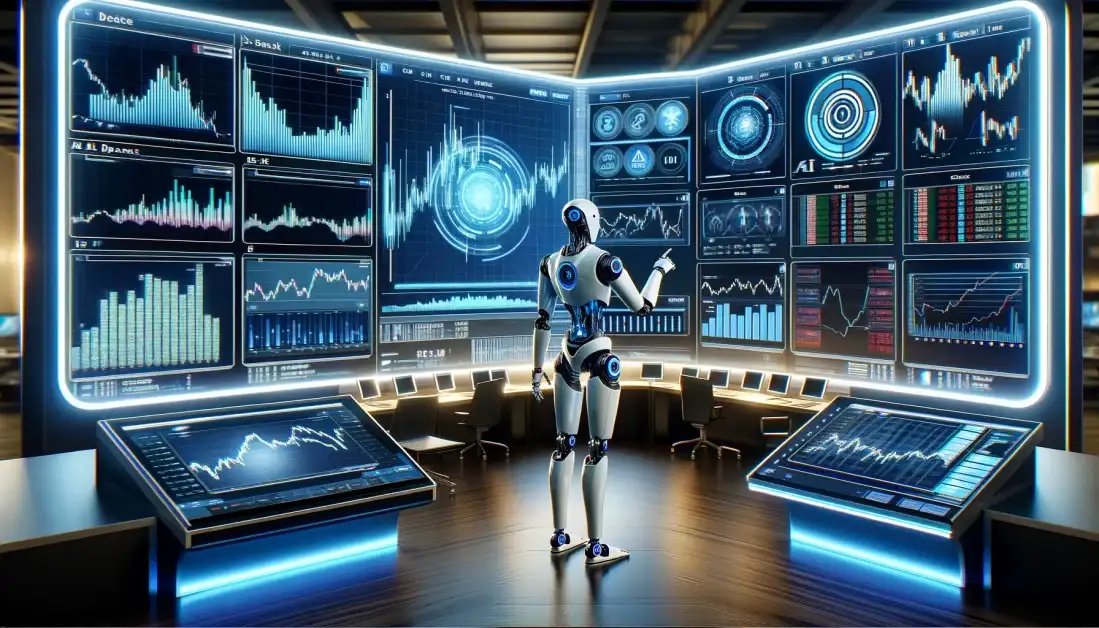

Human traders struggle to react to rapidly changing market conditions and capitalize on fleeting opportunities, often resulting in missed chances and suboptimal trading outcomes. By the time a human trader identifies a market trend or opportunity, it may have already passed, leading to lost profits and increased risk.
Trading decisions can be influenced by emotions like fear or greed, leading to suboptimal outcomes. When traders let emotions drive their decisions, they may deviate from their trading strategies or ignore critical market signals, increasing the likelihood of losses and undermining long-term investment objectives.
Manual traders may be limited in the complexity of trading strategies they can implement, as they are constrained by their ability to analyze large volumes of data and execute trades quickly. This limitation can result in missed opportunities to capitalize on market inefficiencies or deploy sophisticated trading algorithms that automate complex strategies for better risk management and profitability.
Human traders cannot monitor markets continuously, leading to missed opportunities during off-hours. Automated trading systems, on the other hand, operate around the clock, enabling real-time monitoring of market conditions and execution of trades even when human traders are unavailable, ensuring that no potential opportunities are overlooked.
Algorithmic Trading Leveraging AI with Pranzant
AI algorithms analyze market data in real-time, identify trends, and execute trades at high speeds to capitalize on fleeting market opportunities. By leveraging advanced computing capabilities, these algorithms can execute thousands of trades per second, enabling traders to exploit even the smallest price discrepancies for profit.
AI analyzes vast datasets to develop and implement complex quantitative trading strategies based on market signals. By processing large volumes of historical and real-time data, AI-powered algorithms can identify patterns and correlations that human traders may overlook, leading to more informed investment decisions and potentially higher returns.
AI helps manage risk by automatically adjusting positions and optimizing portfolios based on market conditions. By continuously analyzing market data and evaluating portfolio performance, AI algorithms can identify potential risks and opportunities, allowing investors to make informed decisions to protect their investments and maximize returns.
AI executes trades quicker and more efficiently than humans, capturing fleeting market opportunities. By leveraging advanced algorithms and high-speed data processing, AI-powered trading systems can react to market fluctuations in real-time, ensuring timely execution of trades and minimizing the impact of latency on trading outcomes.
Algorithmic trading removes emotional bias from the decision-making process. By relying on predefined rules and parameters, AI-powered trading systems execute trades based solely on objective criteria, without being influenced by emotions like fear or greed, leading to more disciplined and consistent trading outcomes.
AI can continuously monitor markets and react to changes around the clock. With the ability to analyze vast amounts of data in real-time, AI-powered trading systems can detect market trends, news events, and other factors that may impact trading decisions, ensuring that opportunities are not missed even during off-hours.
AI facilitates backtesting of trading strategies and continuous refinement based on historical data. By simulating trades using past market conditions, AI-powered systems can evaluate the effectiveness of trading strategies and identify areas for improvement, allowing traders to refine their approaches and adapt to changing market dynamics for better performance in the future.